The Privatization of Knowledge

(Image Copyright (C) 2012 ATA Walerian Wolawski / SublimeStar.com)
Guerilla Open Access Manifesto
Aaron Swartz [1986-2013]:
Information is power. But like all power, there are those who want to keep it for themselves. The world’s entire scientific and cultural heritage, published over centuries in books and journals, is increasingly being digitized and locked up by a handful of private corporations. Want to read the papers featuring the most famous results of the sciences? You’ll need to send enormous amounts to publishers like Reed Elsevier.
There are those struggling to change this. The Open Access Movement has fought valiantly to ensure that scientists do not sign their copyrights away but instead ensure their work is published on the Internet, under terms that allow anyone to access it. But even under the best scenarios, their work will only apply to things published in the future. Everything up until now will have been lost.
That is too high a price to pay. Forcing academics to pay money to read the work of their colleagues? Scanning entire libraries but only allowing the folks at Google to read them? Providing scientific articles to those at elite universities in the First World, but not to children in the Global South? It’s outrageous and unacceptable.
“I agree,” many say, “but what can we do? The companies hold the copyrights, they make enormous amounts of money by charging for access, and it’s perfectly legal — there’s nothing we can do to stop them.” But there is something we can, something that’s already being done: we can fight back.
Those with access to these resources — students, librarians, scientists — you have been given a privilege. You get to feed at this banquet of knowledge while the rest of the world is locked out. But you need not — indeed, morally, you cannot — keep this privilege for yourselves. You have a duty to share it with the world. And you have: trading passwords with colleagues, filling download requests for friends.
Meanwhile, those who have been locked out are not standing idly by. You have been sneaking through holes and climbing over fences, liberating the information locked up by the publishers and sharing them with your friends.
But all of this action goes on in the dark, hidden underground. It’s called stealing or piracy, as if sharing a wealth of knowledge were the moral equivalent of plundering a ship and murdering its crew. But sharing isn’t immoral — it’s a moral imperative. Only those blinded by greed would refuse to let a friend make a copy.
Large corporations, of course, are blinded by greed. The laws under which they operate require it — their shareholders would revolt at anything less. And the politicians they have bought off back them, passing laws giving them the exclusive power to decide who can make copies.
There is no justice in following unjust laws. It’s time to come into the light and, in the grand tradition of civil disobedience, declare our opposition to this private theft of public culture.
We need to take information, wherever it is stored, make our copies and share them with the world. We need to take stuff that’s out of copyright and add it to the archive. We need to buy secret databases and put them on the Web. We need to download scientific journals and upload them to file sharing networks. We need to fight for Guerilla Open Access.
With enough of us, around the world, we’ll not just send a strong message opposing the privatization of knowledge — we’ll make it a thing of the past. Will you join us?
Aaron Swartz, July 2008, Eremo, Italy
The privatization of our world makes some of us owners and the rest of us renters! They’re doing it with the air we breathe (CO2 Credits) and soon with water! We are the living Earth. We must not allow this to continue!
We Be To Not To Be
Shtick and pitch for fraud
This is another example of current trendy mainstream being given overly exaggerated results. We are simply getting better at expressing our own problem solving to computers.
Has anyone asked themselves or better, an expert of their choice, how a computer stores, understands and expresses its own purpose for being? or
Where a computer finds its own intention to know anything?
WE are providing these elements… not the computers themselves!
Please try to recognize that you are being given a shtick or pitch to make you believe that we are creating intelligent machines. What we are doing is learning to make better use of them! Bankster funded corporatism running our universities and economies are pulling the wool over our eyes. Wake up! Now!
Universal Constants, Variations and… Identities

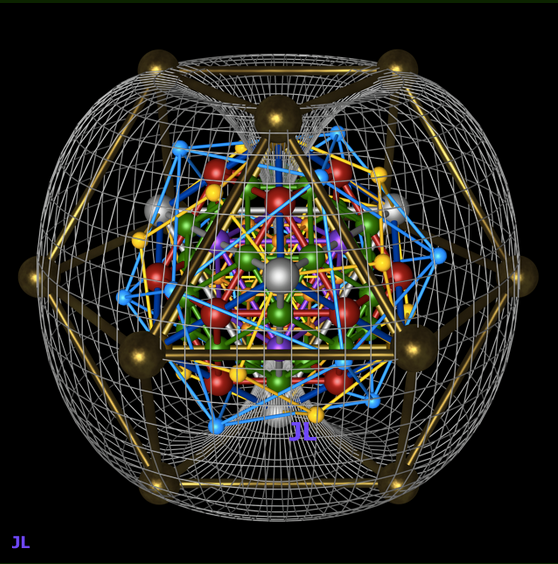
Universal Constants, Variations and… Identities
7) pi is the identity of periodicity
8) e is the identity of change
9) phi the identity of proportion
Strictly Speaking Can’t! Natural Language Won’t?
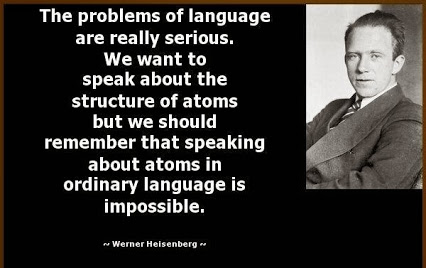
Physics is only complex, because it’s in someone’s interest to have it that way. The way to understanding, even if you don’t understand science, was paved with words. Even if those words led only to a symbolic form of understanding.
I’m a mathematician and can tell you that common ordinary language is quite capable of explaining physics. Mathematics is simply more precise than common language. It pays the price for that precision by being subservient to the causal and compositional relations. These are limitations that metaphysics and philosophy do not have.
Words in language have a structure that mathematics alone will never see as it looks for their structure and dynamics in the wrong places and in the wrong ways. Pure mathematics lacks an underlying expression of inherent purpose in its ‘tool set’.
With natural language we are even able to cross the ‘event horizon’ into interiority (where unity makes its journey through the non-dual into the causal realm). It is a place where mathematics may also ‘visit’ and investigate, but only with some metaphysical foundation to navigate with. The ‘landscape’ is very different there… where even time and space ‘behave’ (manifest) differently. Yet common language can take us there! Why? It’s made of the ‘right stuff’!
The monological gaze with its incipient ontological foundation, as found in pure mathematics, is too myopic. That’s why languages such as category theory, although subtle and general in nature, even lose their way. They can tell us how we got there, but none can tell us why we wanted to get there in the first place!
It’s easy to expose modern corporate science’s (mainstream) limitations with this limited tool set – you need simply ask questions like: “What in my methodology inherently expresses why am I looking in here?” (what purpose) or “What assumptions am I making that I’m not even aware of?” or “Why does it choose to do that? and you’re already there where ontology falls flat on its face.
Even questions like these are met with disdain, intolerance and ridicule (the shadow knows it can’t see and wills to banish what it cannot)! And that’s where science begins to resemble religion (psyence).
Those are also some of the reasons why philosophers and philosophy have almost disappeared from the mainstream. I’ll give you a few philosophical hints to pique your interest.
Why do they call it Chaos Theory and not Cosmos Theory?
Why coincidence and not synchronicity?
Why entropy and not centropy?
…
Why particle and not field?
(many more examples…)
‘Something Has To Give!’ – Speaking By Doing…
 ‘Something Has To Give!’
Speaking by doing…
I appreciate the technology (as long as it isn’t weaponized) and even admire what has been accomplished thus far. Just I know that to get to the ‘promised land’, they’re going to need to transcend and include the ontologically-based methodologies as are shown in the video!
One trip to Google translate reveals this to be mere hype at present. Hidden Markov models aren’t going to do it, people! That’s like trying to do a radar scan of the ocean and only seeing things you’ve been told to see beforehand. Their example involves capital cities and the meta-framing necessary to differentiate them. Essentially they are building structures (like fingerprints) of ideas and trying to do an ‘algebra’ with them.
The AI paradigm must be ‘fortified’ by epistemologically-based perspectives and methodologies, before we can even think of cognition. Clearly they are already involved in the recognition process, but these missing elements in in artificial intelligence is originating from those doing the work in the video (through their intentions, desires, success criterion,…) without their even noticing it! (Or if they do, they don’t make that clear to the viewer.)
Also, they believe in the mysticism that we need only create the necessary initial conditions (like a soup) and then, through emergence (which they cannot define precisely), intelligence (like life) will pop out!
ヽ(•́o•̀)ノ
They will most certainly manage to get the technology to a point that it will become useful (after they’ve shelled out huge sums of money to get there), but they will never reach cognition this way. They will have to part with one of their most sacred dogmas first: the mind is the brain.
The brain is only a part of what we call mind. Our whole bodies are involved with the dialog of mind – from our brains right down to our digestive tracts and even cells (and their constituents).
Good News! It’s Not Just Particles! It’s Properties and Patterns of Particles! – Max Tegmark
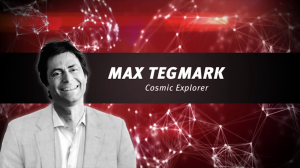 “Consciousness is a mathematical pattern.”
Is it possible to explain the phenomenon of purpose away with another phenomenon of emergence?
I wonder how he defines purpose itself?
Isn’t consciousness more than our senses?
Why are we only looking at states of matter and leave out stages, lines, levels, types,…?
Who is doing the “feeling” he’s describing?
Who gives the particles their work to do?
How are the particles different between dead and living beings?
So we are to replace our questions with a certainty of the phenomenon of consciousness and then explain that in terms of an interpretation of same?
I’m not a religious person, but the video is starting to sound like I should be one!
Is this what we get when a physicist tries to do philosophy? Oh my!
I Really Want To Agree… But I Just Can’t! – Max Tegmark – Cahners Theater
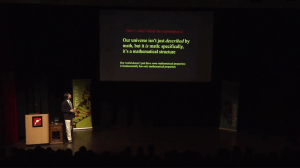
I did it again (for a friend) and tolerated another hour of this man’s presentation (see my post following this one where I cover the one I watched on August 31st).
Beyond the Higg’s Boson, which is not a convincing ‘discovery’, is his claim that the universe is mathematical at (31:00). “In the sense that it [universe] is a mathematical structure.”
Mathematics is simply a precise language!
Here’s one avenue, but I can give others, that may help understand why mathematics cannot be the universe, rather a means to represent it.
Patterns and shapes can be described mathematically just as they are now being described with my words. When he widens his definition to include them (shapes and patterns, structure,…) they represent literally everything and become part of his definition!
He also assigns humanity as a whole as the designer for technology that our amok running corporations have made (and have led the rest of us who ‘enjoy’ employment with them to build for them). The Cuban Missile Crisis isn’t a problem created by humanity as a whole, rather was created by corporations who work for banksters to further their ends.
Causality is all wrong throughout his presentation. Believe me, I wanted to be enthralled by his wisdom, but I’m left disappointed for many reasons… many for which I’ve made no mention.
Is It Science Or Is It Psyence?
Is It Science Or Is It Psyence?
The proud and wonderful achievement of humanity is becoming more like a religion… Why?
The main reason… although there are many more…
It’s funded by banksters who park their money in ‘philanthropy’ to shelter it from taxation and dominate the research and paradigms (through their corporations) towards ends that they value – which have little to do with what is valuable for humanity.
Another important reason is that people confuse what science should be with what science has become. Tolerance has been replaced by authoritarianism that is primed with such a vehemence as to spurn and marginalize any deviation from the established ‘doctrine’. Especially if those explanations happen to be based upon knowledge that is non-physical in nature or pose radically different explanations for given experimental evidence. We expect science to be fair and open to new ideas, but the reality is very different.
You see this, for example, in the young minds (zealots) newly indoctrinated into the ‘faith’ and their fierceness in wanting to teach others they encounter (debate) the process of science (even if they are addressing someone who, because of their own academic training and research, takes that knowledge as self-evident). They are full of the dogma their young and pliable minds have been exposed to, but never learned to be tolerant and wise with what they know.
Science’s ‘heydays’ are over unless it starts to recognize and tolerate competing explanations for experimental evidence than those found in the trendy mainstream.
There is a growing number of scientists, philosophers, mathematicians and learned people, who are aware of the sad state of science, and whose numbers are reaching a critical threshold such that it will usher in a form of reformation to right the situation.
This video reveals some of the cracks in our present day ‘science’. Why are these issues not resolved? Because the real answers are bad for business – at least for the corporations.
For the banksters it’s about full-spectrum dominance hierarchy and the loss of all personal and collective sovereignty for the remainder of humanity; for they can print as much money as they need to animate the corporations.
David Chalmers – Consciousness is Fundamental, Consciousness is Universal
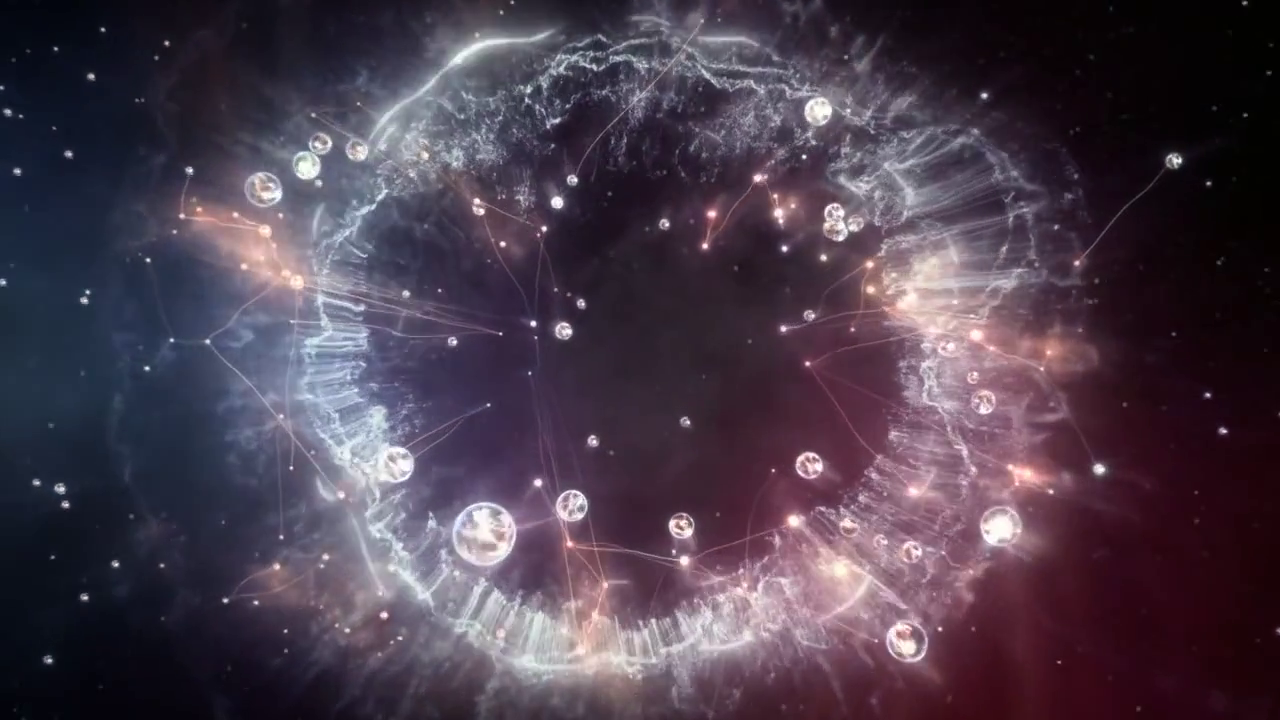
Consciousness Is Fundamental (@09:27)
Consciousness Is Universal (@11:35)
Modern philosophy that likely is true!
I was expecting that ill feeling I get listening to modern philosophers and it started out that way, but suddenly!!! It changed!
He’s talking about my work!
(https://independent.academia.edu/CareyButler/Papers)
Now, if he can free himself from the brain-based paradigms of consciousness…
Knowledge Is What Awareness Does – Knowledge Representation as a Means to Define Meaning Precisely
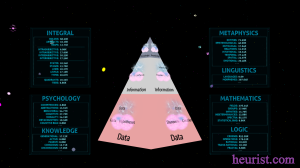
Knowledge Representation as a Means to Define Knowledge Precisely
Video is finally here!
Spreading It Thick! Hopelessness Propaganda Placement That Doesn’t Even Smell Good! (BS)
Helplessness Propaganda Placement Video
This propaganda piece is easy to decode. Let’s play like we’re redundant.
We will never make humans redundant. Even if those who run and control our society want it that way! Creativity cannot be replaced and, although this video mentions it, it’s only ‘intelligence’ masking it.
I’m thinking of the film WALL-E. The humans were redundant and left the Earth on some pointless trip and left intelligent robots on the Earth to clean up their garbage.
The analogy of the horse fails (among other analogies in the film) when one realizes that horses were only assigned the purposes that we imagined for them. (Not to mention for ourselves!)
The film is social engineering propaganda designed to drive hopelessness into the viewer. It’s more of this arrogant in your face ‘Get used to it, like it or not’ weaponized culture (‘bitch culture’) they sell to us.
Just because our corporations are leading us to a place where automation takes our jobs away they have not and cannot take our usefulness in creativity away. They are describing more about their failure than their victory. They describe a culture and social fabric that they created, not WE!
The whole of humanity, and all of its potential (which they have failed to find access to) is not even being considered in this artificial world they are creating!
There are many other subtle mind manipulations going on in this piece, but I’d like to leave that open for future discussion.
Rhythm On So Many Levels! – Gnarls Barkley – Crazy
It’s worth your time!
And if you thought that was nice… Check this one out!
I get waves… the hair on my arms and scalp start to move..
Gnarls Barkley- – – ” Crazy ” ( H Q )
Meaningful Thoughts From a Little Big Man!
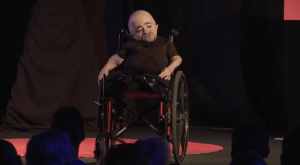
(click picture to show the video)
Adaption = Celebration
Watch to really understand (see) the connection.
Benefits of Meditation

It is vital to be able to slip into a state of calm on a moments notice.
I’ve been practicing this since 2007 so it’s pretty well a ‘part of me’ (internalized).
Please comment, if you have stories to tell or insights to share on this topic. (Example insight: breathing in through the nose and out through the mouth can enhance…)
 Heurist.me (Carey G. Butler)