What do all things have in common?

Latest

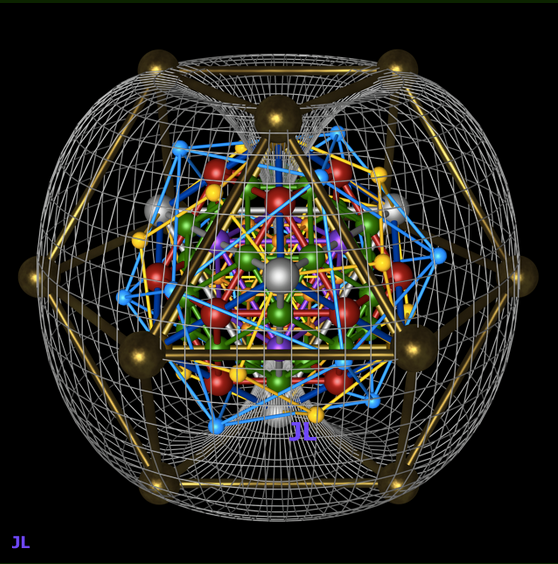
Universal Constants, Variations and Identities

Constants and Variances 1Constants and Variances 2

Universal Constants and Variances
#10 All holons have at least four fundamental capacities. (Potential)
Horizontal:
1) Agency (Maintaining wholeness/identity) Pull to wholeness
2) Communion (Maintaining partness/relationship) Pull to partness
Vertical:
3) Transcendence (Becoming more wholeness) Pull upwards
4) Dissolution (Breaking down into constituent parts) Pull downwards
(see #6 for definition of holon)

See http://mathesis-universalis.com for more information.

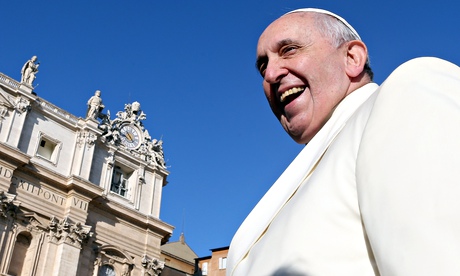
The Religion of Science Has a New Pope!

PopeThe Religion of Science Has a New Pope!
And ‘deniers’ are the neo-heretics and infidels!
The Pope appears to usher in a new Dark Age for Humanity by creating an encyclical… not about religion… it’s about science and politics!
Will a new age of Inquisition also ensue?

“He has been called the ‘superman pope’, and it would be hard to deny that Pope Francis has had a good December. Cited by President Barack Obama as a key player in the thawing relations between the US and Cuba, the Argentinian pontiff followed that by lecturing his cardinals on the need to clean up Vatican politics. But can Francis achieve a feat that has so far eluded secular powers and inspire decisive action on climate change?”

“It looks as if he will give it a go. In 2015, the pope will issue a lengthy message on the subject to the world’s 1.2 billion Catholics, give an address to the UN general assembly and call a summit of the world’s main religions.”

The Privatization of Knowledge

(Image Copyright (C) 2012 ATA Walerian Wolawski / SublimeStar.com)

Guerilla Open Access Manifesto
Aaron Swartz [1986-2013]:

Information is power. But like all power, there are those who want to keep it for themselves. The world’s entire scientific and cultural heritage, published over centuries in books and journals, is increasingly being digitized and locked up by a handful of private corporations. Want to read the papers featuring the most famous results of the sciences? You’ll need to send enormous amounts to publishers like Reed Elsevier.

There are those struggling to change this. The Open Access Movement has fought valiantly to ensure that scientists do not sign their copyrights away but instead ensure their work is published on the Internet, under terms that allow anyone to access it. But even under the best scenarios, their work will only apply to things published in the future. Everything up until now will have been lost.

That is too high a price to pay. Forcing academics to pay money to read the work of their colleagues? Scanning entire libraries but only allowing the folks at Google to read them? Providing scientific articles to those at elite universities in the First World, but not to children in the Global South? It’s outrageous and unacceptable.

“I agree,” many say, “but what can we do? The companies hold the copyrights, they make enormous amounts of money by charging for access, and it’s perfectly legal — there’s nothing we can do to stop them.” But there is something we can, something that’s already being done: we can fight back.

Those with access to these resources — students, librarians, scientists — you have been given a privilege. You get to feed at this banquet of knowledge while the rest of the world is locked out. But you need not — indeed, morally, you cannot — keep this privilege for yourselves. You have a duty to share it with the world. And you have: trading passwords with colleagues, filling download requests for friends.

Meanwhile, those who have been locked out are not standing idly by. You have been sneaking through holes and climbing over fences, liberating the information locked up by the publishers and sharing them with your friends.

But all of this action goes on in the dark, hidden underground. It’s called stealing or piracy, as if sharing a wealth of knowledge were the moral equivalent of plundering a ship and murdering its crew. But sharing isn’t immoral — it’s a moral imperative. Only those blinded by greed would refuse to let a friend make a copy.

Large corporations, of course, are blinded by greed. The laws under which they operate require it — their shareholders would revolt at anything less. And the politicians they have bought off back them, passing laws giving them the exclusive power to decide who can make copies.

There is no justice in following unjust laws. It’s time to come into the light and, in the grand tradition of civil disobedience, declare our opposition to this private theft of public culture.

We need to take information, wherever it is stored, make our copies and share them with the world. We need to take stuff that’s out of copyright and add it to the archive. We need to buy secret databases and put them on the Web. We need to download scientific journals and upload them to file sharing networks. We need to fight for Guerilla Open Access.

With enough of us, around the world, we’ll not just send a strong message opposing the privatization of knowledge — we’ll make it a thing of the past. Will you join us?

Aaron Swartz, July 2008, Eremo, Italy

The privatization of our world makes some of us owners and the rest of us renters! They’re doing it with the air we breathe (CO2 Credits) and soon with water! We are the living Earth. We must not allow this to continue!

We Be To Not To Be

Shtick and pitch for fraud

Shtick and pitch for fraud

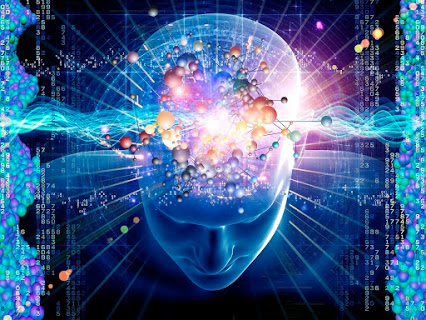
This is another example of current trendy mainstream being given overly exaggerated results. We are simply getting better at expressing our own problem solving to computers.

Has anyone asked themselves or better, an expert of their choice, how a computer stores, understands and expresses its own purpose for being? or
Where a computer finds its own intention to know anything?

WE are providing these elements… not the computers themselves!

Please try to recognize that you are being given a shtick or pitch to make you believe that we are creating intelligent machines. What we are doing is learning to make better use of them! Bankster funded corporatism running our universities and economies are pulling the wool over our eyes. Wake up! Now!

Universal Constants and Variances

Constants and Variances 1 Constants and Variances 2

#6 Reality is composed of whole parts. (Holons)
Arthur Koesler coined the term ‘Holon’ that refers to entities as both wholes and parts of some other whole.
https://en.wikipedia.org/wiki/Holon_%28philosophy%29

For example: a whole atom is part of a whole molecule, which is part of a whole cell, which is part of a whole organism,… Each of these entities are neither a whole or a part; rather, a whole part or Holon.

There’s a 2000 year old philosophical squabble between atomists and holists: “Which is ultimately real – the whole or the part?” The answer is neither or both, if you prefer…

There are only ‘whole-parts’: Holons.

[More are coming soon in a new post…]


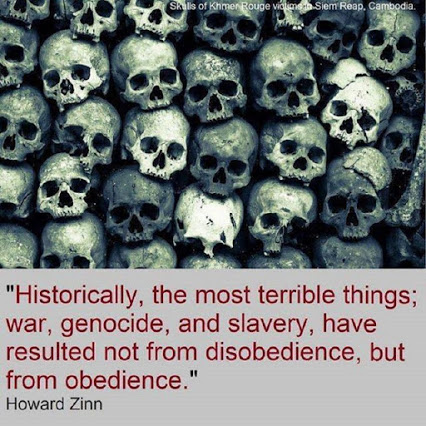
Obedience Is Inhumane

Obedience is the killer

Obedience Is Inhumane
Except for those who’s income depends upon conformity and/or denial… then you’re on the wrong side of history. Think about it.

You know you’re working against yourself when you marginalize others to serve your own willful ignorance (“Conspiracy Theorist!”, “Nut Job”, “Anti-semite”, “Racist”). The perpetrators of our mutual demise have supplied you with heinous weaponry.

The greatest expression of cowardice is to deny your own conscience.

Universal Constants and Variances

Constants and Variances 1 Constants and Variances 2 Constants and Variances 3 - muKnow Constants and Variances 5 - We are the ones we have been waiting for! Constants and Variances 4 Constants and Variances 7 - Example

Universal Constants and Variances
#1 Awareness is primary and fundamental. (Substrate)
#2 All awareness is non-dual unless it is dual. (Duality)
#3 There is no inside without an outside nor outside without an inside. (Interiority/Exteriority)
#4 Duality is bounded, non-duality is boundless. (Boundary)
#5 Boundaries arise in a spectrum from diffuse to concise. (Crossing)

[More are coming soon in a new post…]

A few of those who have followed my posts have been asking for more information about my work. Towards that end, I’m going to start publishing my growing list of universal constants and variances. It is these constants and variances that form the foundation of my work.

There are about as many of them as there are stars in our universe (if you count the primary and derived together), so I don’t think I’ll run out of them! Most of them are self-explanatory, but if you have any questions, please don’t hesitate to ask in the appropriate thread. The numerical ordering is not yet important, as I’m still collecting and collating them as I discover them.

I have no tolerance for trolling or people who abuse others in my threads; especially on these threads about the constants and variances! So if you plan to wreak havoc here, you’ll get bumped real fast. I don’t mind criticism or skeptical opinions at all, but please be civil with everyone (including me).

See http://mathesis-universalis.com for more information.

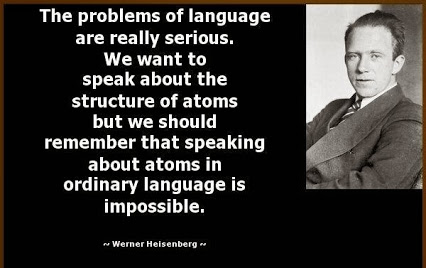
Strictly Speaking Can’t! Natural Language Won’t?

language

Physics is only complex, because it’s in someone’s interest to have it that way.  The way to understanding, even if you don’t understand science, was paved with words. Even if those words led only to a symbolic form of understanding.

I’m a mathematician and can tell you that common ordinary language is quite capable of explaining physics. Mathematics is simply more precise than common language. It pays the price for that precision by being subservient to the causal and compositional relations. These are limitations that metaphysics and philosophy do not have.

Words in language have a structure that mathematics alone will never see as it looks for their structure and dynamics in the wrong places and in the wrong ways. Pure mathematics lacks an underlying expression of inherent purpose in its ‘tool set’.

With natural language we are even able to cross the ‘event horizon’ into interiority (where unity makes its journey through the non-dual into the causal realm). It is a place where mathematics may also ‘visit’ and investigate, but only with some metaphysical foundation to navigate with. The ‘landscape’ is very different there… where even time and space ‘behave’ (manifest) differently. Yet common language can take us there! Why? It’s made of the ‘right stuff’!

The monological gaze with its incipient ontological foundation, as found in pure mathematics, is too myopic. That’s why languages such as category theory, although subtle and general in nature, even lose their way. They can tell us how we got there, but none can tell us why we wanted to get there in the first place!

It’s easy to expose modern corporate science’s (mainstream) limitations with this limited tool set – you need simply ask questions like: “What in my methodology inherently expresses why am I looking in here?” (what purpose) or “What assumptions am I making that I’m not even aware of?” or “Why does it choose to do that? and you’re already there where ontology falls flat on its face.

Even questions like these are met with disdain, intolerance and ridicule (the shadow knows it can’t see and wills to banish what it cannot)! And that’s where science begins to resemble religion (psyence).

Those are also some of the reasons why philosophers and philosophy have almost disappeared from the mainstream. I’ll give you a few philosophical hints to pique your interest.

Why do they call it Chaos Theory and not Cosmos Theory?
Why coincidence and not synchronicity?
Why entropy and not centropy?

Why particle and not field?
(many more examples…)